Soya Skewer Kebabs (Soya Seekh Kebab)
Soya chunks make surprisingly brilliant seekh kebabs. Once boiled and squeezed dry, they blend into a firm mixture that can be shaped onto skewers (seekh in Hindi), seasoned generously, and grilled or air-fried to get those charred edges and juicy insides. Serve with mint chutney and sliced onion for a complete meal.
Jump to Recipe ↓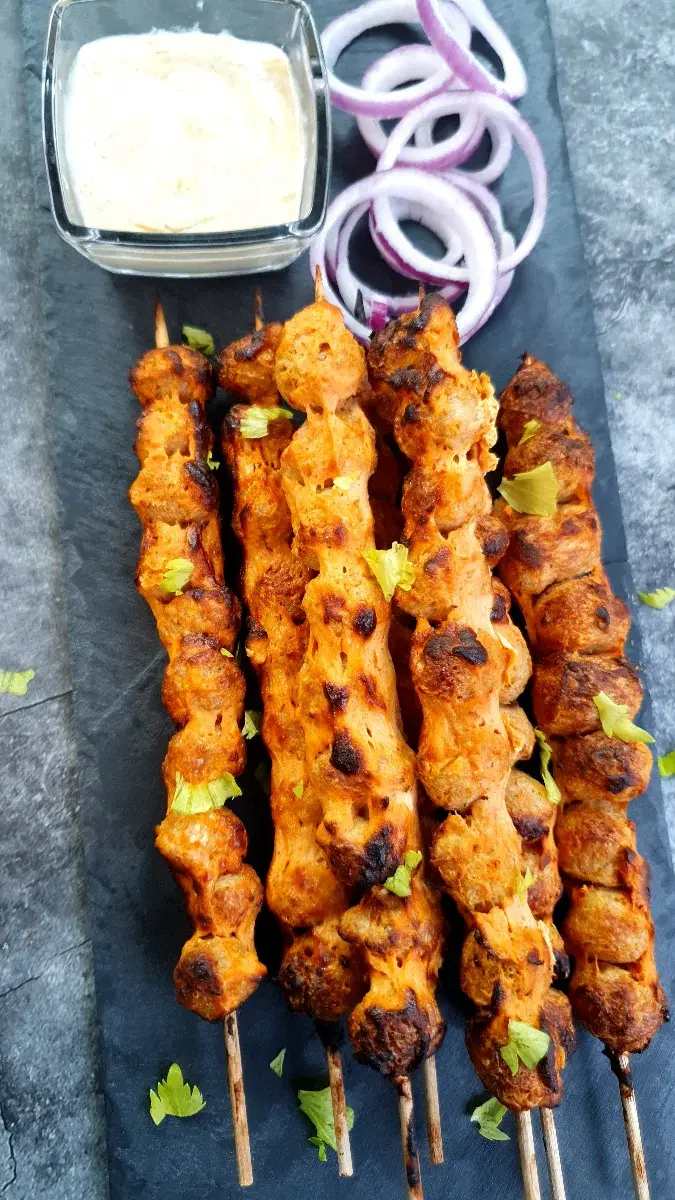
Equipment I Used
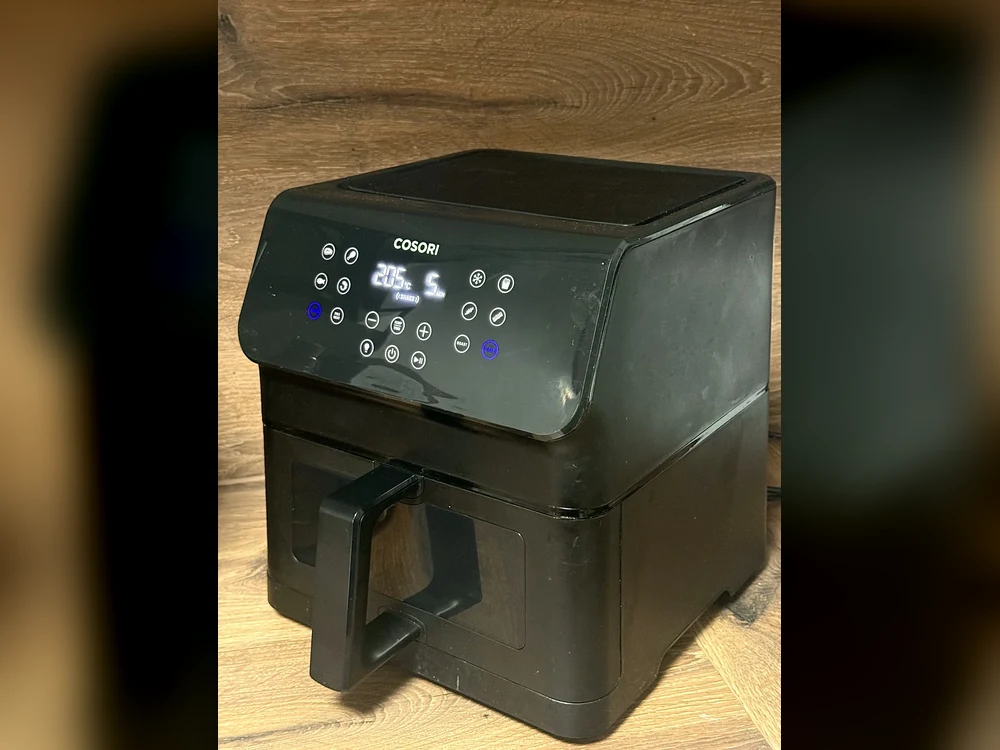
The COSORI Air Fryer is what I air-fry this in.
Werbung Affiliate link — I may earn a small commission at no extra cost to you. Full disclosure ↓
Seekh Kebabs Without Any Compromises
Skewer kebabs get served at celebrations, eaten at roadside diners, ordered from every kebab restaurant, and most people assume you need minced meat to make them properly. This recipe disproves that.
Soya chunks, once boiled and squeezed completely dry and pulsed in a food processor to a coarse mince, create a base that works exactly like the real thing. The texture (that slight resistance and then yielding) is there. The ability to hold its shape on a skewer is there. What changes is the protein source, and honestly, the flavour is equally good.
The mixture needs everything good seekh kebabs need. Onion for moisture and sweetness. Fresh coriander and mint for brightness. Ginger, garlic, green chilli for depth and heat. Garam masala and coriander powder for that recognisable spice profile. Chickpea flour as the binder that holds it all together.
Shape it firmly around skewers, press into a cylinder, refrigerate for fifteen minutes so it firms up. Then grill, pan-cook, or air fry until charred at the edges and cooked through.
Serve with mint chutney and sliced onion. Nobody at the table needs to know these are soya.
Why Your Seekh Kebabs Fall Apart
Why do my kebabs fall apart on the skewer? — This is always the problem when soya kebabs fall off skewers. Soya chunks, once boiled, are full of water. If you squeeze them incompletely and then pulse them in the food processor, the moisture makes the mixture too wet and sticky to hold a firm shape. Squeeze each chunk thoroughly — press hard between your palms, and do it twice if needed. The pulsed soya should feel dry and cohesive, not wet or sticky.
Why does my kebab crack while cooking? — Raw onion has a high water content. If you use too much, or chop it too coarsely, it releases its water into the mixture during cooking and causes the kebab to crack and fall. Use a very small onion. After chopping, you can also squeeze the onion briefly in a cloth to remove some liquid before adding it to the mixture.
Why won’t the mixture hold its shape around the skewer? — The mixture needs to be pressed firmly and compactly around the skewer, not draped over it. Wet your hands slightly, take a portion, and press it firmly around the skewer, rotating and compressing until the surface is smooth and tight. A loose shape means a kebab that cracks apart the moment it hits heat. Refrigerate after shaping — the cold firms the chickpea flour binder and helps everything hold together.
Kebabs That Command Respect at the Table
When the kebabs come off the grill or out of the air fryer (charred at the edges, smoky and fragrant, the surface showing those beautiful dark marks), they look exactly like something you would be served at a good restaurant.
The inside is yielding and well-spiced. The outside has that slight crust. The mint chutney on the side brings brightness. The sliced onion cuts through with freshness.
These are kebabs to be proud of. Make them for guests and let them guess what they are made from. The guesses will surprise you.
How to Make Soya Skewer Kebabs (Soya Seekh Kebab)
-
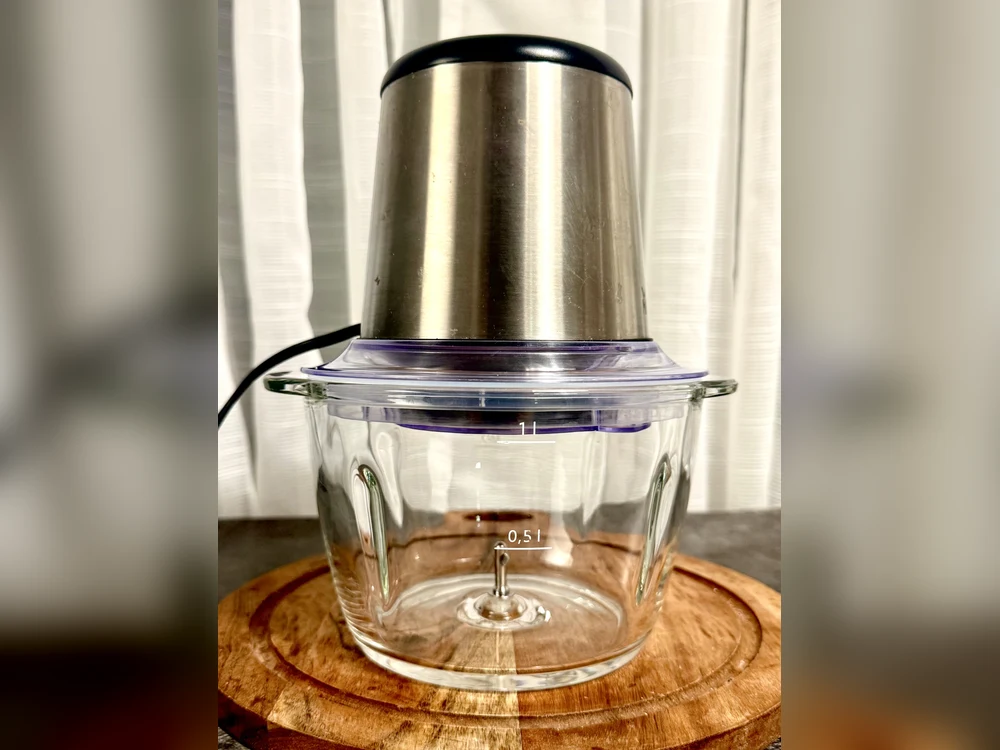
Pulse boiled and squeezed soya chunks in a food processor until coarsely minced – not too smooth.
-
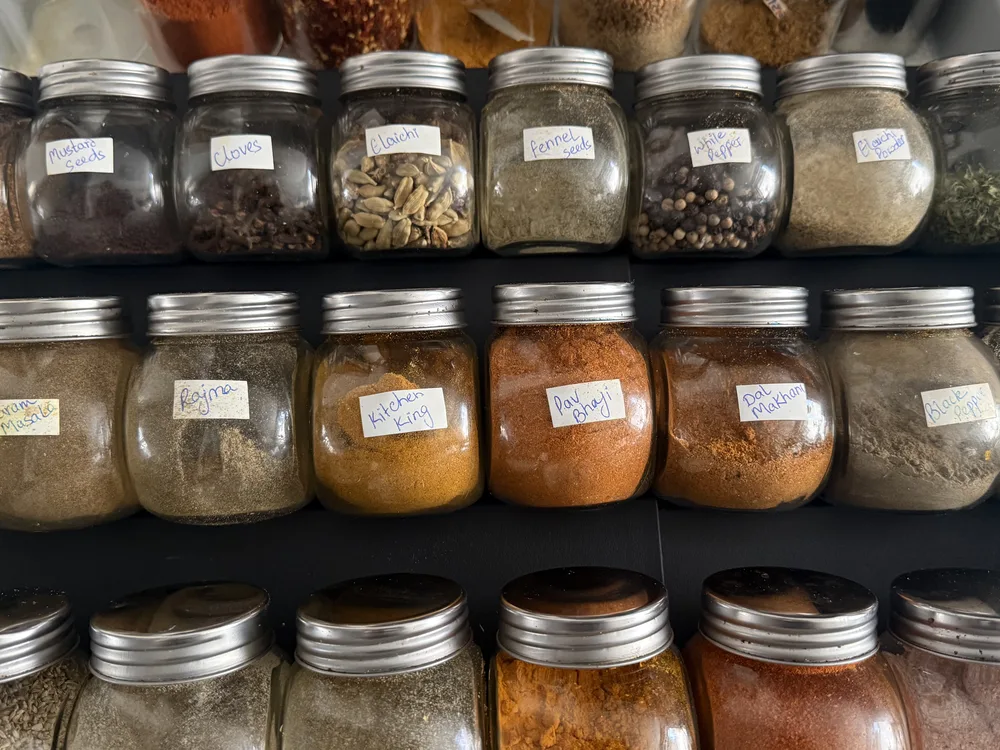
Mix with onion, coriander, mint, ginger, garlic, green chilli, chickpea flour, oil, and all spices.
-
Mix until the mixture holds together. Refrigerate for 15 minutes.
-
Divide into portions and shape firmly around skewers.
-
Brush with oil.
-
Grill, air fry at 200°C for 15-18 minutes, or cook on a hot pan, turning every few minutes until browned on all sides.
-
Serve with mint chutney and sliced onions.
You Might Also Need
The links here are the products I use in my kitchen regularly. Some links on this page are affiliate links — if you buy through them, I earn a small commission at NO Extra cost to you. But, this helps me keep providing you with tasteful recipes, keeps my passion alive and helps me pay the bills to run my website and social media channels.
Werbung: Bei den mit Werbung gekennzeichneten Links zu Amazon.de handelt es sich um Affiliate-Links. Beim Kauf über diese Links erhält Rimpy Behl eine kleine Provision, ohne Mehrkosten für dich.