Spicy Korean Braised Tofu
If you've been making tofu wrong, this recipe fixes that. Tofu pan-fried until properly golden, then simmered in a sauce with gochujang, two kinds of soy, sesame oil, and garlic. The tofu soaks up all that flavour as it braises. Serve over rice or noodles and the whole meal comes together in under 20 minutes.
Jump to Recipe ↓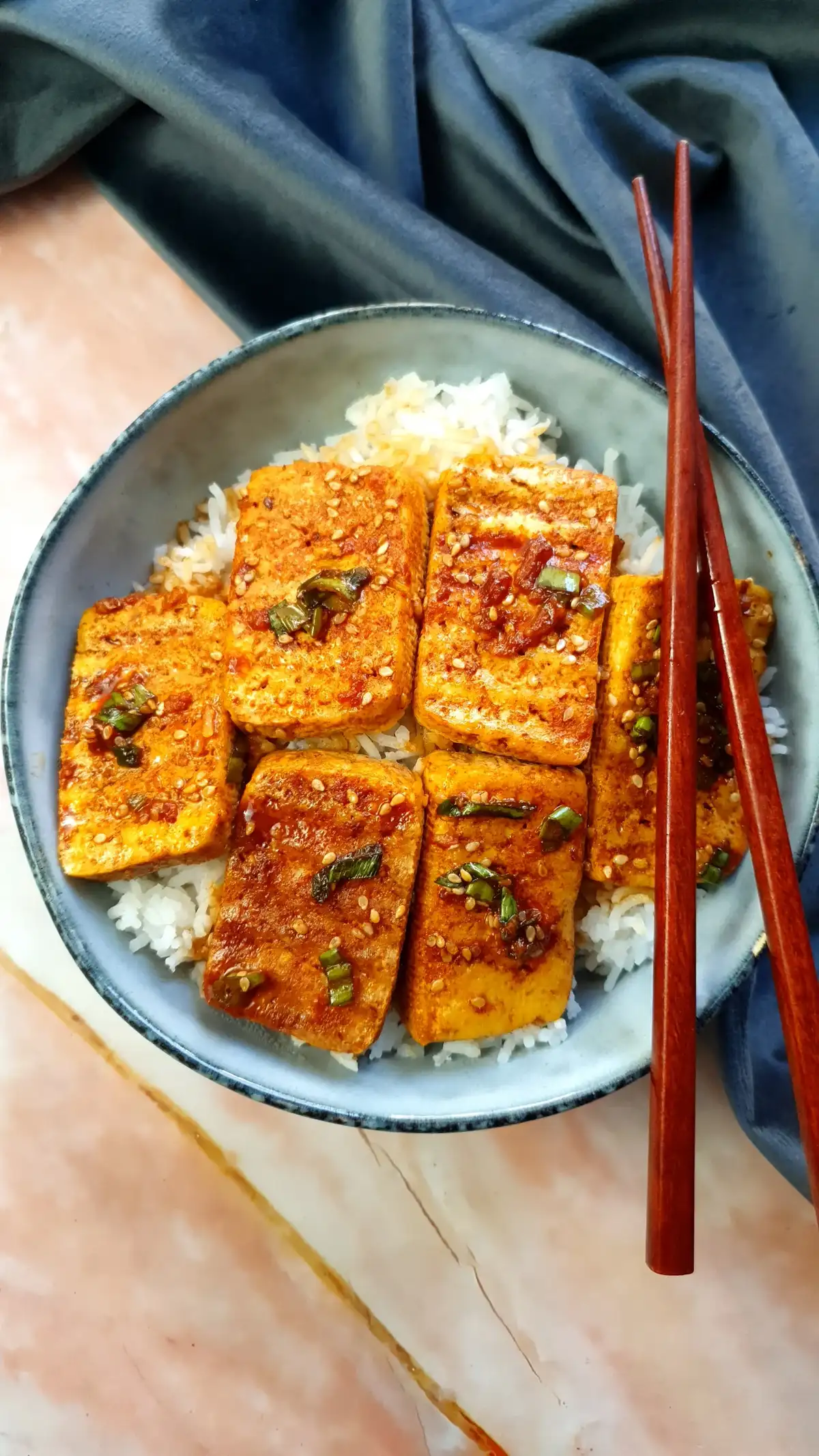
The Tofu Recipe That Changes the Conversation
The tofu conversation in India usually goes one of two ways. People who have never tried it properly assume it is bland and textureless. People who have tried bad tofu know exactly why the first group feels that way.
There is also a third group: people convinced tofu is bad for regular consumption. We are not opening the tofu-and-hormones comment section today. Some debates are best left to the internet.
This recipe fixes the first two.
Korean braised tofu is proof that the problem was never tofu itself. It was always the preparation. To make it worth my while, I first patted the tofu dry, completely and thoroughly, pressing out every bit of moisture. Then, I shallow pan-fried it in hot oil until it was genuinely golden brown on both sides and crisped at the edges. Not pale, not slightly coloured: properly golden, properly crisp. That crust is everything.
This last step is what makes it Korean. To make the sauce, I mixed together gochujang, dark and light soy sauce, rice vinegar, sesame oil, sesame seeds, and garlic. I put the mix in the pan after the tofu, let it simmer until slightly thickened, and then added the tofu back in to absorb it all. After four to five minutes of braising, every piece of tofu was coated in glossy, caramelised sauce, deeply flavoured, and irresistible.
Serve over rice. Have extra sauce in a small bowl on the side. Accept that you will be making this again very soon.
This sauce is worth doubling. It works just as well on paneer, broccoli, or mushrooms, so keep a batch in the fridge and braise whatever you have on hand.
Why Your Korean Tofu Didn't Get That Crust
Why does my tofu release water instead of browning?: If your tofu sizzles and then steams instead of browning, it had too much moisture. After cutting, place the slices between layers of kitchen paper and press with something heavy, like a book or a pot. Do this for at least ten minutes. The tofu should feel noticeably drier before it goes in the pan. The oil must be hot before the tofu touches it. Test by dropping a tiny piece in; it should sizzle immediately and vigorously.
Why is my sauce too salty?: Gochujang, light soy, and dark soy are all quite salty. Taste the combined sauce before adding it to the pan and adjust. I added both light and dark soy sauces: dark gives a great coating, and the light soy sauce carries most of the actual flavour. The sauce concentrates as it reduces, so your raw sauce should taste slightly lighter than your target final flavour. Pull back on the soy if you are already close to your salt limit.
Why doesn’t my tofu taste braised?: The braising step is not optional. Adding the sauce and immediately tossing everything together gives you sauced tofu, not braised tofu. There is a difference. Put the tofu back in the sauce, keep the heat at a medium simmer, and let it actually braise for four to five minutes. Turn the pieces gently halfway. The sauce will reduce slightly and the tofu will absorb flavour in a way that coating never achieves.
Tofu That Turns Sceptics Into Believers
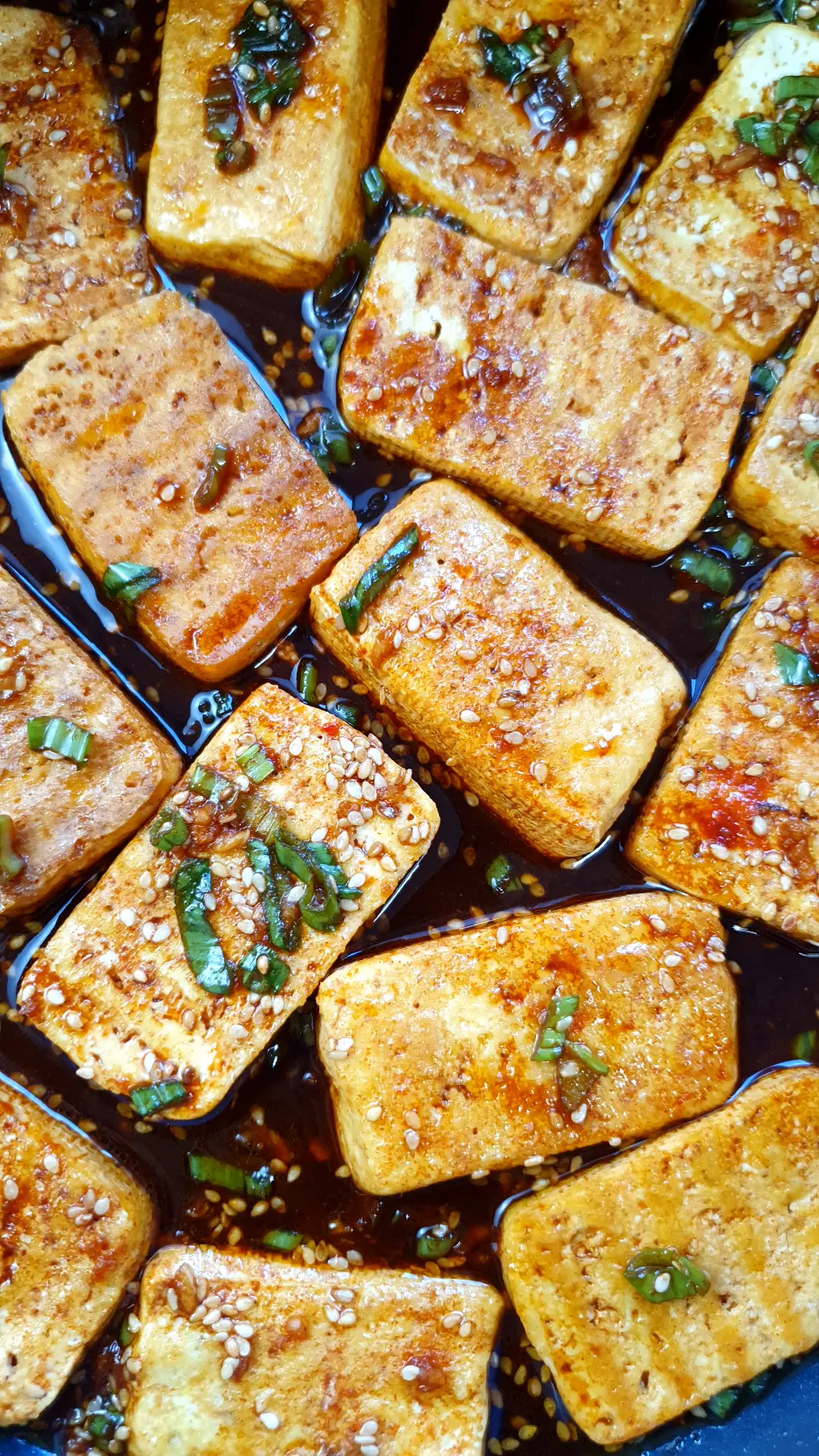
When the tofu is done, deeply golden on its surfaces, glossy from the sauce, and smelling of sesame, gochujang, and caramelised soy, it is genuinely impressive.
The first bite has everything: a slightly crisped exterior from the initial pan-fry, a yielding, flavour-saturated interior from the braise, and that sauce clinging to every surface. Bold, spicy, deeply savoury, with the brightness of rice vinegar cutting through.
Serve over steamed rice with spring onions on top. This is the dish that makes tofu believers out of people who thought they did not like it. Make it. Watch the table go quiet.
How to Make Spicy Korean Braised Tofu
-
Pat tofu dry thoroughly. Cut into thick slices or rectangles.
-
Heat oil in a pan on medium-high heat. Pan-fry tofu slices until golden brown on both sides, about 3-4 minutes per side. Set aside.
-
In a bowl, mix all sauce ingredients: light soy, dark soy, rice vinegar, water, gochujang, sugar, sesame oil, sesame seeds, and garlic.
-
In the same pan, pour in the sauce. Bring to a simmer.
-
Add the pan-fried tofu back in. Simmer for 4-5 minutes, turning tofu gently so it absorbs the sauce.
-
Garnish with chopped spring onions. Serve with steamed rice or noodles.
You Might Also Need
The links here are the products I use in my kitchen regularly. Some links on this page are affiliate links — if you buy through them, I earn a small commission at NO Extra cost to you. But, this helps me keep providing you with tasteful recipes, keeps my passion alive and helps me pay the bills to run my website and social media channels.
Werbung: Bei den mit Werbung gekennzeichneten Links zu Amazon.de handelt es sich um Affiliate-Links. Beim Kauf über diese Links erhält Rimpy Behl eine kleine Provision, ohne Mehrkosten für dich.